
Crawler Boom Lift vs Towable Boom Lift: Which Is Better for Your Jobsite?
Crawler boom lifts and towable boom lifts can both place an operator above ground and around obstacles, but they solve different access and logistics problems. A buyer who compares them only by maximum working height may miss the factors that determine whether the machine can enter the site, move between work areas, set up on the available ground and fit the company’s transport system.
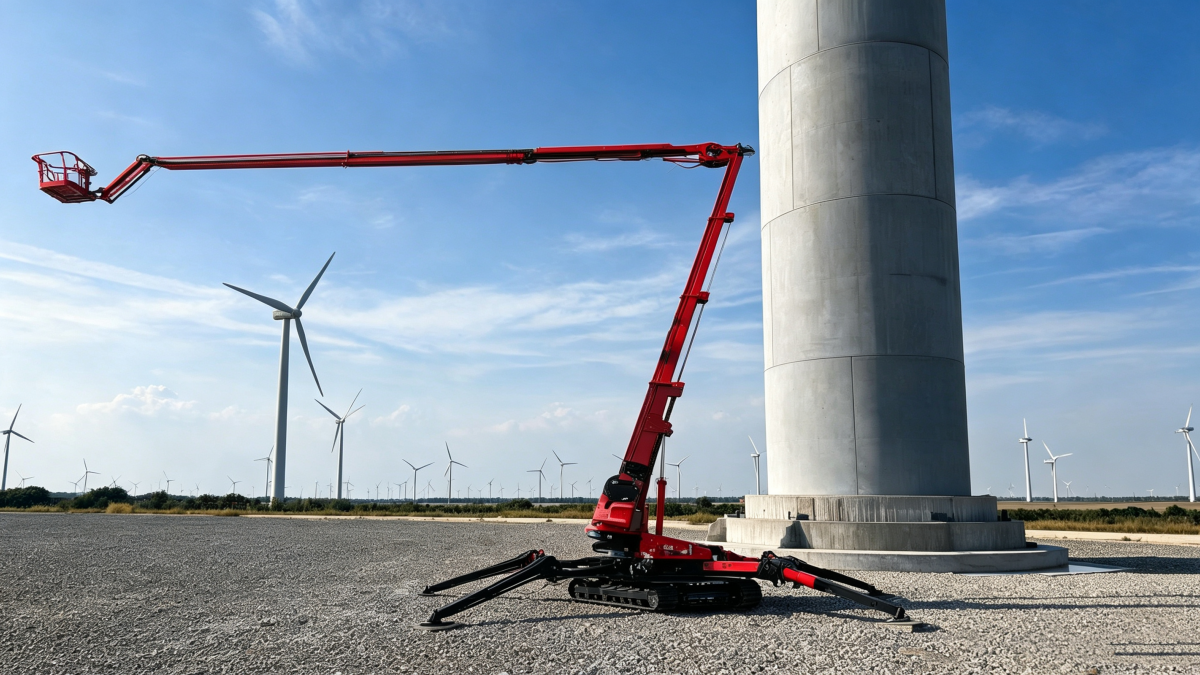
A crawler boom lift carries its boom on a tracked chassis and moves under its own travel power. A towable boom lift is built on a trailer-style chassis and is transported behind a suitable towing vehicle. Both commonly use outriggers before elevation. Both can offer articulated reach and more than one power option. Their practical difference lies in how they arrive, how they move after arrival, how their weight contacts the ground and how much logistics support the job requires.
This comparison helps contractors, rental companies, property-maintenance teams, tree-care businesses and equipment distributors choose the platform type that better matches their recurring work. It is a decision framework, not a claim that one machine is universally superior. The exact model, manufacturer’s manual, working envelope and destination rules always take priority.

The short answer
Choose a crawler boom lift when self-propelled movement within the site, tracked mobility, compact manoeuvring and access over suitable uneven or landscaped ground are central to the job. Choose a towable boom lift when road transport behind a compatible vehicle, lower transport complexity for dispersed light-duty work and quick relocation between distant sites are more important.
That answer is only a starting point. A crawler machine may still need a trailer or truck to travel on public roads. A towable machine may still be difficult to position on soft ground. Neither design can be elevated safely without checking slope, bearing capacity, outrigger support, clearance and the model’s operating limits. The selection should therefore be made across ten practical criteria.
1. Transport to the jobsite
Transport is the clearest difference. A towable boom lift has a drawbar, road wheels and trailer chassis. Subject to the machine’s approval, local law, towing-vehicle capacity and coupling requirements, it may be towed between jobs without a separate equipment carrier. This can be attractive to service companies visiting several sites in one day or to buyers whose customers already operate suitable vehicles.
A crawler boom lift is not normally driven on public roads. It is moved on a truck, trailer or other approved carrier. The buyer must compare machine weight and dimensions with the carrier’s payload, deck size, ramp capacity, tie-down points and legal limits. Loading angle and ground clearance also matter. For exports, shipping dimensions and any disassembly must be confirmed.
Towable does not automatically mean “simple.” The towing vehicle, driver licence, braking system, lighting, tyres, registration, speed rating and road approval must comply with the destination. An imported lift may require documentation or components different from those used in the manufacturing country. A buyer should obtain written confirmation that the quoted trailer specification matches local rules.
Crawler transport can be efficient when a contractor already operates plant trailers or low-loaders. It can also be easier to standardize for a rental fleet where delivery is handled by trained drivers. The relevant comparison is the company’s total transport workflow, not the absence or presence of a drawbar.
2. Movement after unloading
Once inside the site, the advantage often shifts toward the crawler design. The tracked machine can travel under its own power between suitable work areas. Depending on controls and model design, one operator may reposition it without connecting a towing vehicle. Tracks also enable pivoting or tight manoeuvring that can be valuable in courtyards, landscaped sites and constrained construction areas.
A towable lift is manoeuvred using a towing vehicle, manual effort or an optional powered drive system, depending on the model. For a single setup beside a building, that may be completely adequate. For repeated movement around a large property, the extra positioning steps can reduce productivity. The buyer should ask how far and how often the machine will move after unloading.
Neither type should travel with the boom elevated unless the manufacturer specifically designs and permits that mode. Many compact crawler and towable platforms are stabilized before elevation. Repositioning therefore means lowering and stowing the boom, retracting outriggers, checking the route, moving, and completing a new setup inspection. Self-propelled travel saves effort, but it does not eliminate this sequence.
3. Ground conditions and surface protection
Tracks provide a longer contact area than small road tyres and may reduce ground pressure in some configurations. This can help a crawler boom lift travel across appropriate soil, gravel, turf or uneven ground where a conventional trailer arrangement is less comfortable. Tracks can also provide traction on suitable grades within the model’s travel limit.
However, tracked mobility is not permission to operate on weak ground. Soft fill, saturated soil, buried utilities, cellar roofs, drainage channels, slab edges and excavations can fail under a machine or outrigger. The crawler’s stabilizers still create concentrated loads. A ground assessment and suitable support pads remain essential.
Towable lifts often have a lower overall mass at comparable compact heights, which can be valuable on prepared surfaces and where transport weight is restricted. Their road tyres may roll cleanly across firm paving, but narrow tyres can sink or rut soft ground. Optional powered drive may improve positioning but does not change the bearing capacity of the site.
For valuable turf, the answer is not automatic. Tracks can spread travel load, yet skid steering and sharp turns can damage grass. Trailer wheels can create ruts. Outrigger pads from either machine can mark the surface. Plan a protective route, use mats where appropriate and avoid unnecessary turning. Compare actual ground pressure and outrigger reactions from the manufacturer rather than relying on visual impressions.
4. Access width, turning and restricted spaces
Crawler boom lifts are often chosen for constrained access because the chassis can be relatively narrow and the machine can turn within a compact area. The articulated boom can then reach over obstacles after the stabilizers are deployed. Some projects involve a gate, side passage, internal courtyard or aisle where a towing vehicle cannot enter, even though the lift itself can.
Towable lifts can also be narrow when stowed and may pass through gates well. The challenge is the overall length, drawbar and turning radius during positioning. If the machine has a powered drive system, it may be detached from the towing vehicle and manoeuvred more precisely. The buyer should compare the complete movement method rather than chassis width alone.
Measure the full route: gate width, door height, corners, ramps, thresholds, bridge capacity, overhead cables and the space required to reverse or turn. Then measure the setup area. Both types can have an outrigger footprint much wider than the travel width. A machine that enters a courtyard may still lack room to stabilize or rotate the boom.
Tail swing and basket movement must also remain inside a controlled work zone. In public areas, add barriers, pedestrian routes and traffic control to the spatial plan. The “minimum space” is not simply the dimension between the outer stabilizer feet.

5. Setup time and frequency of relocation
Both platform types normally require a deliberate setup process: inspect the area, position the chassis, deploy the outriggers, level the machine, verify interlocks and establish an exclusion zone. Automatic or hydraulic levelling can reduce manual effort, but the operator must still confirm that the ground and support points are suitable.
A towable lift can be efficient when the towing vehicle positions it close to one long-duration task. Disconnecting, chocking and stabilizing are predictable steps. A crawler lift can be more efficient when the site has several work points unreachable by a vehicle, because the machine can travel between them without towing. Its benefit increases with the number and difficulty of internal relocations.
Compare a realistic day, not one setup. Calculate unloading, initial positioning, each relocation, final loading and road transport. A ten-minute difference repeated six times is more important than a small difference in the first setup. Rental companies should also consider how easily occasional users understand the movement and levelling controls after proper training.
Setup speed must never encourage shortcuts. Outriggers must be deployed in the configuration required by the manufacturer, interlocks must function, and the machine must be level within its limits. If variable outrigger positioning is offered, the working envelope may change. Confirm that the control system correctly recognizes the configuration and that operators understand the resulting restrictions.
6. Working height, outreach and boom geometry
Crawler and towable models overlap across many height classes. A buyer should therefore compare platform height, working height, horizontal outreach, up-and-over clearance, basket capacity, rotation and the full working envelope. Two lifts advertised at the same height can reach very different points behind an obstacle.
Crawler machines may be available across a broader high-reach range. ZMT’s current crawler category lists CBL12 through CBL32, including compact, mid-range and high-reach choices. ZMT’s towable category should be checked separately for its current models and configurations. The presence of a model in a height class does not prove that it fits the required outreach or access route.
For tree work, roof-edge maintenance and façades, mark the desired platform positions on a site drawing. Identify where the chassis can safely stand, then compare each point with the working envelope at the intended basket load. Account for branches, canopies, parapets, signs, balconies and overhead services. The platform should reach the work without the operator climbing on rails or overreaching.
Model names and website tables can contain inconsistent terminology. Ask for the controlled specification and load chart for the exact configuration. In particular, verify whether the advertised number refers to platform height or working height and whether optional equipment changes weight or outreach.
7. Power options, noise and indoor use
Both crawler and towable boom lifts may be offered with battery, AC electric, diesel, gasoline or dual-power options, depending on model. The choice affects where the machine can work, how it is charged or refuelled, and what maintenance capability the owner needs.
Battery or mains-electric operation can suit indoor spaces and noise-sensitive sites, subject to ventilation, floor loading and electrical safety. Verify charger voltage, frequency, plug, battery capacity, charging time and low-temperature performance. If an external cable powers hydraulic functions, plan cable protection and confirm the required supply.
Combustion power can support outdoor duty cycles where electricity is unavailable. Confirm engine make, fuel, emissions compliance, service intervals and spare parts in the destination. Combustion engines require specific controls in enclosed or poorly ventilated areas; “dual power” does not make the engine safe to run indoors.
The two lift types do not have an inherent winner on power. Compare the configurations actually offered in the required height class. A towable lift with battery power may suit quiet building maintenance, while a dual-power crawler may suit a contractor moving between outdoor rough ground and indoor final positioning. Write the duty cycle before choosing.
8. Operator experience and control
The operator must be trained for the equipment category and familiarized with the specific model. Crawler travel controls add a movement system that towable models without powered drive do not have. Operators must understand track steering, travel slope, visibility, pinch points, cable or hose clearance and the effect of turning on sensitive surfaces.
Towable operators need competence in towing, coupling and uncoupling as well as platform operation. The responsible team must check hitch security, breakaway system, lights, tyres, brakes and load distribution before road travel. A platform operator may not automatically be a qualified or legally permitted trailer driver.
Both types require knowledge of emergency descent, ground controls, overload and tilt warnings, platform levelling, outrigger interlocks and rescue planning. The buyer should include manuals, familiarization and supervisor procedures in the acquisition package. A simple control panel does not remove the need for training.
9. Maintenance and fleet support
Crawler undercarriages introduce tracks, rollers, tension and travel motors that require inspection. Track damage or incorrect tension can affect mobility and create downtime. The buyer should understand adjustment procedures, wear limits and replacement-part availability. Hydraulic outriggers, boom pins, hoses, cylinders, controls and safety devices also require scheduled attention.
Towable lifts add road-running components such as tyres, wheel bearings, brakes, coupling, suspension and lights. These components may have legally required inspections in addition to aerial-platform maintenance. Machines that travel long road distances accumulate wear differently from equipment delivered on a carrier.
Power system maintenance depends on configuration. Batteries need correct charging and inspection; engines need fuel, filters and scheduled service; hydraulic systems need clean fluid and leak control. Compare the complete maintenance plan, not just the boom.
For a fleet, standardization can outweigh small performance differences. Shared batteries, filters, control components, manuals and technician knowledge reduce inventory and training complexity. Ask the supplier for a recommended spare-parts package, illustrated parts list, wiring and hydraulic diagrams, warranty terms and remote-support process.
10. Purchase price and total cost of use
Towable boom lifts can offer a lower entry cost in some height classes, but price varies with reach, power, drive assistance, certification and options. Crawler lifts add the tracked drive system and may carry a higher purchase and transport cost. The correct financial comparison is cost per productive job, not invoice price alone.
Create a three-year or five-year estimate covering purchase, finance, transport vehicle or carrier, fuel or electricity, road costs, scheduled service, inspections, tyres or tracks, batteries, spare parts, insurance, training and expected residual value. Add labour time for loading, towing, setup and internal repositioning. A machine that completes more of the company’s typical jobs can justify a higher initial cost.
Utilization matters for rental companies. A towable lift may appeal to customers with a suitable vehicle and straightforward sites. A crawler may earn a premium on projects with difficult access, landscaping or self-propelled movement needs. Analyze local customer demand and delivery capability before expanding the fleet.
A criterion-by-criterion decision guide
Use this practical summary to form a shortlist:
- Frequent public-road relocation:A compliant towable model may be more convenient when the towing system, vehicle and driver meet local rules.
- Frequent movement within a difficult site:A crawler model often provides the more useful self-propelled solution.
- Soft or uneven travel surfaces:Tracks may offer an advantage, but obtain ground-pressure data and assess the site.
- One prepared setup beside a road or building:A towable platform may be sufficient and economical.
- Narrow access without room for a towing vehicle:A compact crawler may be easier to position; verify every route dimension.
- High-reach requirement:Compare the available model ranges and transport implications; never choose from height alone.
- Indoor or low-noise work:Compare the actual battery, AC or dual-power configuration and charging infrastructure.
- Rental to occasional users:Consider training, transport risk, control simplicity and the support burden for each design.
- Existing plant-transport fleet:A crawler can integrate well if carrier capacity and loading procedures are already available.
- Existing light-vehicle service fleet:A locally compliant towable unit may integrate more easily if towing limits permit it.
Example scenarios
Tree-care contractor working across landscaped estates
The machine must leave the hard surface, pass through a constrained entrance and move between several trees. A crawler boom lift is likely to be the stronger starting point because tracked, self-propelled movement is valuable. The contractor must still protect turf, assess underground services, check outrigger loads and verify reach through the canopy.
Sign-maintenance team visiting several retail sites
Most setup areas are firm car parks and jobs are separated by road travel. A towable boom lift may reduce delivery complexity if the vehicle, driver and trailer are compliant. The team should compare setup frequency, traffic control and whether powered positioning is needed in tight service areas.
Rental company serving mixed construction sites
The company already delivers compact plant on trailers and customers request access over gravel, soil and restricted areas. A crawler lift may achieve higher utilization even if its purchase price is greater. Fleet support, track parts, operator familiarization and carrier capacity should be planned before purchase.
School or hotel maintenance department
The machine is used occasionally on prepared surfaces and may be stored on site. Noise, storage, charging and ease of setup can be more important than self-propelled rough-ground travel. A battery towable model could be appropriate, but a compact crawler may still win if access behind buildings is difficult. A site survey decides the issue.
Questions to send to the supplier
Whether you are considering crawler or towable equipment, request answers to the same core questions:
- What are the maximum platform height, working height and horizontal outreach?
- Can you provide the working-envelope diagram at the quoted basket capacity?
- What are the stowed, operating and shipping dimensions and weights?
- What is the full outrigger footprint and the load at each support point?
- What are the maximum travel slope and permitted operating inclination?
- Which power sources are available for this exact model and destination?
- What emergency, overload, tilt, levelling and interlock systems are fitted?
- Which documents, labels and conformity records are supplied?
- For a towable model, what road approval, braking, coupling and tyre specification applies?
- For a crawler model, what track type, ground pressure and maintenance procedure apply?
- What spare parts, warranty, commissioning and technical support are included?
Ask the supplier to put the selected configuration and options on the quotation. If a feature is discussed only in chat but not recorded in the order documents, it is difficult to verify later.
Frequently asked questions
Is a crawler boom lift the same as a spider lift?
The terms overlap in the market. “Spider lift” often describes a compact tracked aerial platform with wide stabilizing outriggers that resemble legs. Product terminology varies, so compare chassis, boom, working envelope and setup requirements rather than relying on the name.
Can I tow a crawler boom lift?
A crawler lift normally travels to the job on a suitable carrier, not directly behind a vehicle on its tracks. A purpose-built transport trailer may be used if its payload, dimensions, restraint points and legal requirements match the machine.
Is a towable boom lift self-propelled?
Some towable lifts offer a powered drive or manoeuvring system, but this is model-specific and not equivalent to every crawler travel system. Confirm travel speed, slope limit, control method and permitted surface.
Which type is better on grass?
Tracks may spread travel load and improve traction, but turning can damage turf and outriggers create concentrated loads. A light towable unit may also work on firm protected ground. Obtain ground data, plan mats and assess site conditions before choosing.
Which type reaches higher?
Both are available in multiple height classes. Crawler ranges may extend to higher models, including ZMT’s CBL32, but actual selection depends on platform height, outreach, load and transport—not the category name.
Do both types need outriggers?
Many compact crawler and towable boom lifts use outriggers before elevation. The exact deployment, levelling and interlock requirements are defined by the manufacturer. Never elevate based on appearance alone; follow the model manual.
Which type is cheaper to own?
It depends on utilization, transport, labour, maintenance and the jobs won. Towable lifts may cost less to acquire in some classes, while a crawler may complete difficult-access work more productively. Compare total cost per job over the planned ownership period.
Choose for the recurring job, then verify the exact model
The crawler-versus-towable decision becomes clear when the buyer maps the whole workflow. Start at the depot, follow the machine to the site, trace its access route, show every setup point and include the return trip. Add ground conditions, power, load, training and support. The better lift is the one that completes that workflow safely and economically.
If your work requires tracked movement, constrained-site positioning or higher crawler reach, review ZMT’s CBL12–CBL32 range and send the project measurements for confirmation. If road towing and prepared-site use dominate, compare the current ZMT towable boom lift range. In both cases, request the final working envelope, specification, transport data and destination compliance before placing the order.
When your job site has slopes, rough terrain, or sensitive floors — a wheeled boom lift is the wrong tool. Full stop.